How to Build a Stronger Upper Body With Reformer-Based Training
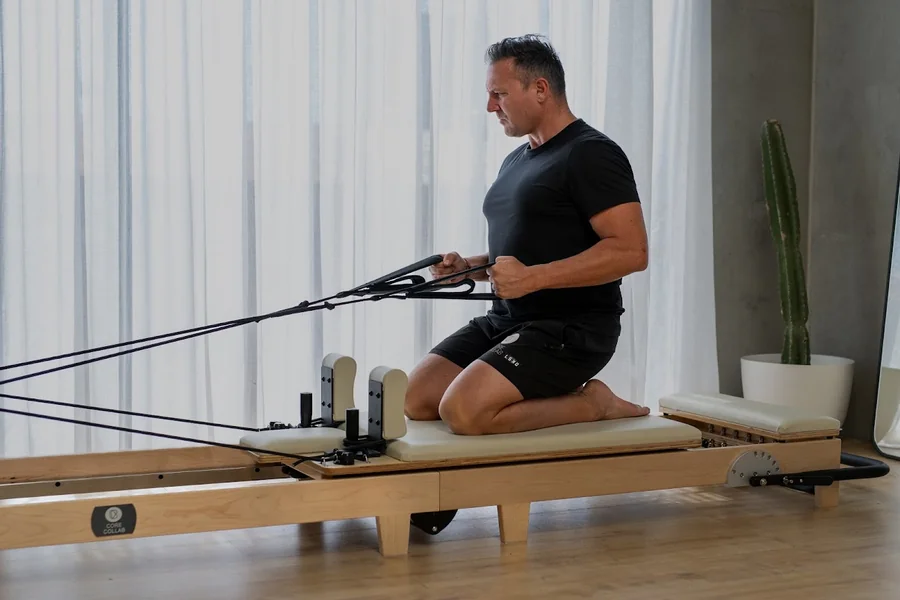
Upper-body training often gets stuck between two extremes. Either it is heavy lifting with sore joints, or it is light band work that never feels challenging. Reformer-based training sits in the middle. It can build serious strength, but it does it with control, smooth resistance, and less joint stress.
This style of training also fixes a common weakness. Many people can press and curl, but struggle with posture, scapular control, and deep core support. A reformer forces the body to stabilise while it pulls and pushes. That combination is where real upper-body progress shows up.
This article explains how to build upper-body strength with reformer-based training. It covers the key muscles, the best movement patterns, and simple ways to progress without shoulder irritation.
Why Reformer Training Works So Well for the Upper Body
A reformer challenges the upper body in a different way than free weights. Springs create resistance that stays “on” through the movement. That means the back and shoulders cannot relax in the easy parts. The carriage also adds an instability element, which forces better control.
This is important for men who sit a lot, drive a lot, or train with too much pressing and not enough pulling. Tight chest muscles and weak upper back muscles are common. That combination often leads to rounded shoulders and cranky neck tension. Reformer pulling patterns strengthen the upper back while teaching the ribcage to stay stacked.
It also suits joint-friendly training. Smooth resistance is easier on elbows and shoulders than some repetitive dumbbell work. The goal is not avoiding intensity. The goal is to build intensity with better mechanics.
The Upper-Body Basics That Matter Most
Upper-body strength is not only about arms. The biggest drivers are the back, shoulders, and trunk support. When those areas work well, pressing and pulling become stronger and safer.
Key areas to focus on:
- Mid-back muscles that pull the shoulder blades back and down
- Rotator cuff muscles that stabilise the shoulder joint
- Lats that power strong pulls and support posture
- Core muscles that stop the ribcage from flaring during effort
If the ribcage pops up during pressing, the lower back often takes over. If the shoulder blades shrug during pulls, the neck takes over. The fix is not “try harder.” The fix is a better setup and controlled range.
Set up Cues That Protect Shoulders
Small setup changes can make the reformer work feel completely different. Shoulder comfort often comes down to scapular position and ribcage control, and AAOS guidance on scapular mechanics explains why strengthening the shoulder-blade muscles helps restore proper motion.
Start with these cues:
- Keep the neck long and jaw relaxed
- Keep ribs stacked over hips, not flared
- Let the shoulder blades slide down before pulling
- Use a range that stays smooth and controlled
- Control the return phase, not only the pull
A useful test is this: the work should be felt in the back and shoulders, not in the front of the neck. If the neck feels loaded, resistance is too heavy, or the range is too big.
The Best Upper-Body Movement Patterns on a Reformer
A strong upper-body plan needs balance. For every push, there should be at least one pull. Many training plans overdo pressing and underdo rowing. Reformer work is perfect for fixing that.
The most effective patterns include:
- Rows for mid-back strength and posture
- Straight-arm pulls for lats and core control
- Chest presses for pushing strength with control
- Triceps presses for lockout strength
- Biceps curls for arm strength and tendon capacity
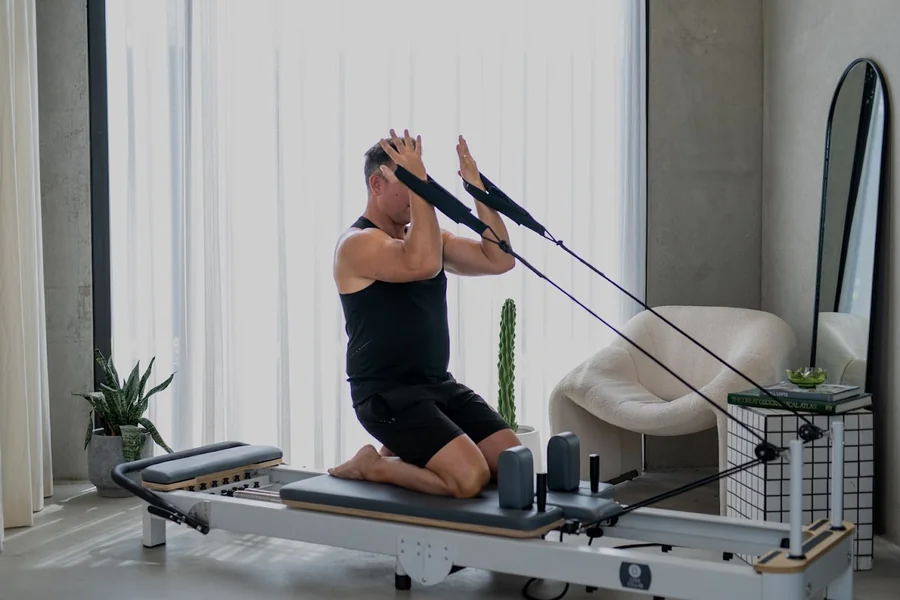
These patterns can be done with straps, handles, or a bar, and research on rowing muscle activation notes that rowing variations can strongly recruit key mid-back muscles linked to better posture.
Grip and handle choice can change comfort a lot, especially for wrists and elbows. This is where smart add-ons help, because they allow better mechanics and more training variety.
For anyone building a home setup, quality reformer pilates accessories for training can make upper-body sessions feel more stable, more comfortable, and easier to progress.
How to Progress Without Beating Up Elbows and Shoulders
Reformer training can feel addictive. It is easy to push resistance too fast. Progress should be measured and boring. That is usually the safest path.
Use one progress lever at a time:
- Increase resistance slightly and keep it for two weeks
- Add one extra set, not multiple new exercises
- Slow down the tempo to increase tension without a heavier load
- Reduce rest by a small amount, not by half
Pain is not the goal. Sharp shoulder pain is a stop signal. A mild burn in the back and arms is normal. Discomfort in the front of the shoulder often means the shoulder is drifting forward. That can be fixed by lowering resistance and improving scapular position.
Common Mistakes That Stall Upper-Body Results
Many people miss progress because they train the wrong pattern too often. Others miss progress because they rush reps and lose control.
The most common issues include:
- Too much pressing and not enough pulling
- Shrugging shoulders during rows
- Letting ribs flare during presses
- Using resistance that forces sloppy form
- Skipping warm-up and jumping into heavy sets
Fixing these is usually enough to restart progress. Better reps beat heavier springs.
Where High-Intensity Reformer Styles Fit
Some people want more intensity than a classic reformer session. High-intensity reformer-style workouts have become popular, and many people search for well-known studio methods when they want that “burn” feel. Those methods use trademarked machines and branded approaches.
A Sculptformer is a high-intensity reformer-style option that aims for strong resistance, controlled tempo, and full-body demand while staying low-impact. It can suit people who want an athletic challenge and faster conditioning, but it still depends on the same basics: scapular control, ribcage position, and smooth tempo.
Intensity works best after the technique is solid. When technique is solid, intensity becomes productive instead of painful.
The Bottom Line
Upper-body strength on a reformer is built through controlled pulling and pushing, not random arm work. Focus on rows, presses, and straight-arm pulls, then support those patterns with good setup and steady progress. Keep resistance honest, control the return phase, and balance pushing with plenty of pulling.
With consistent sessions, posture improves, shoulders feel more stable, and upper-body strength climbs without the joint wear that comes from sloppy heavy training.