Different Types of Braces and How to Choose the Best
According to the American Association of Orthodontists’ 2024 data, approximately 4 million Americans currently wear braces, with adult treatment accounting for nearly 25% of all cases. This surge reflects a fundamental shift in how we approach orthodontic care — what was once considered primarily a teenage rite of passage has evolved into a sophisticated field offering multiple treatment pathways for virtually any age or lifestyle.
The landscape of orthodontic options today bears little resemblance to the one-size-fits-all metal brackets of previous decades. From nearly invisible ceramic materials to cutting-edge self-ligating systems and removable clear aligners, the variety can feel overwhelming for anyone trying to navigate their treatment options. For parents evaluating choices for their children or adults finally addressing long-delayed alignment issues, understanding these differences isn’t just about aesthetics — it’s about finding the approach that fits your specific dental needs, lifestyle constraints, and treatment goals.
The decision you make affects not just how your smile looks during treatment, but how effectively and efficiently your teeth move, how you maintain oral hygiene, and ultimately, how satisfied you’ll be with the entire orthodontic experience.
How Do Braces Work to Straighten Teeth
The fundamental principle behind all orthodontic treatment relies on the remarkable ability of teeth to move through bone when subjected to sustained, gentle pressure. When a bracket applies consistent force to a tooth, it creates a biological response in the periodontal ligament — the tissue connecting your tooth root to the surrounding bone. This pressure triggers specialized cells called osteoclasts to break down bone on the compressed side while osteoblasts build new bone on the stretched side, effectively allowing the tooth to migrate into its new position.
Modern braces accomplish this through a carefully engineered system of brackets, archwires, and elastics. The brackets, bonded directly to each tooth surface, serve as anchors for the archwire — a thin metal wire that acts as the primary force delivery system. As orthodontists adjust the wire tension and shape during regular appointments, they’re essentially programming the direction and magnitude of force applied to each tooth. The wire wants to return to its original shape, and this constant spring-like tension gradually guides teeth into proper alignment.
What makes contemporary orthodontics particularly effective is the precision with which these forces can be controlled. Different wire materials — from flexible nickel-titanium to stiffer stainless steel — deliver varying levels of force throughout treatment. Early stages typically use lighter forces to initiate movement, while later phases employ stronger wires to fine-tune positioning. Elastic bands add another layer of control, correcting bite relationships between upper and lower teeth that brackets and wires alone cannot address.
The entire process typically unfolds over 18 to 36 months, depending on the complexity of the case and the specific type of braces chosen. Understanding this biological foundation helps explain why some brace types work faster than others and why certain materials might be recommended for your particular situation.
Overview of Main Types of Braces and Their Differences
Metal and Ceramic Braces Compared
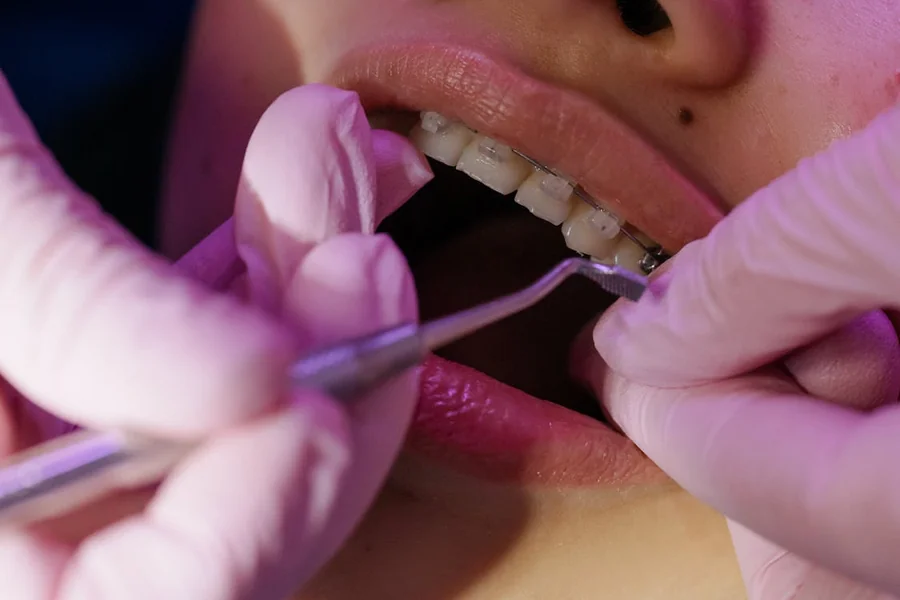
Traditional metal braces remain the most widely used orthodontic appliance, constructed from high-grade stainless steel that’s both durable and highly effective for complex tooth movements. These consist of metal brackets bonded to the front of teeth, connected by metal archwires and secured with small elastic ties called ligatures. The primary advantage lies in their strength — metal braces can handle virtually any orthodontic challenge, from simple crowding to severe bite corrections, typically delivering results in the shortest timeframe possible.
Ceramic braces function identically to metal braces but substitute tooth-colored or clear ceramic brackets for the stainless steel components. The ceramic material blends with natural tooth color, making the appliance significantly less noticeable while maintaining the same mechanical effectiveness. However, ceramic brackets are slightly larger than metal ones and more prone to staining if patients consume coffee, tea, or other pigmented foods regularly.
The choice between these two often comes down to aesthetic priorities versus practical considerations. Metal braces cost less, resist staining, and allow for colorful elastic ties that some patients, particularly younger ones, enjoy customizing. Ceramic braces appeal to image-conscious teens and adults but require more careful maintenance and typically add a few months to treatment time due to the material properties.
Self-ligating, Lingual, and Clear Aligners Explained
Self-ligating braces represent a significant technological advancement, using specialized brackets with built-in clips or doors that hold the archwire in place without requiring elastic ties. This design allows the wire to slide more freely through the bracket, potentially reducing friction and enabling teeth to move more efficiently. Both metal and ceramic versions exist, with some orthodontists reporting shorter treatment times and fewer adjustment appointments.
Lingual braces attach to the backside of teeth, making them completely invisible from the front. Custom-manufactured for each patient’s unique tooth anatomy, these brackets require specialized training to install and adjust properly. While they offer unmatched aesthetics for patients who cannot have any visible orthodontic appliance, they typically cost significantly more and can initially affect speech and tongue comfort.
Clear aligners, exemplified by systems like Invisalign, take an entirely different approach using a series of removable, transparent plastic trays that gradually shift teeth into position. Each tray moves teeth in small increments before being replaced with the next in the sequence. This system appeals to adults who need moderate corrections and want the flexibility to remove their appliance for important events, though it requires strict compliance — wearing the aligners 20-22 hours daily — to achieve predicted results. For individuals concerned about braces cost in NYC, clear aligners often represent a middle-ground investment between basic metal braces and more complex lingual systems.
Pros, Cons, Suitability, and Maintenance of Braces
Each brace type serves different patient populations based on age, lifestyle, and orthodontic complexity. Metal braces excel for children and teenagers who need comprehensive treatment but aren’t concerned about appearance during the process. Their durability withstands the rough treatment that younger patients often subject them to, while the ability to use colored elastics can make the experience more enjoyable. Adults who prioritize treatment speed and effectiveness over aesthetics also find metal braces appealing, particularly for complex cases requiring significant tooth movement or bite correction.
Ceramic braces suit appearance-conscious teenagers and working adults who need fixed appliances but want discretion. However, they require patients committed to excellent oral hygiene since staining becomes more noticeable on the lighter-colored brackets. Adults in professional settings often find ceramic braces strike the right balance between effectiveness and aesthetics, though the slightly longer treatment time requires patience.
Clear aligners work best for motivated adults with mild to moderate orthodontic needs — typically spacing issues, minor crowding, or simple bite corrections. The removable nature appeals to people with active social or professional lives, but the discipline required makes them less suitable for teenagers who might “forget” to wear them consistently. Complex cases involving significant rotation or vertical movement often require traditional braces.
Daily maintenance varies significantly across brace types. Fixed braces require diligent brushing around brackets and wires, using specialized orthodontic toothbrushes and floss threaders to clean between components. Patients should avoid hard, sticky, or chewy foods that can damage brackets or bend wires. When brackets come loose or wires poke uncomfortably, orthodontic wax provides temporary relief until the next adjustment appointment.
Clear aligner maintenance focuses on keeping trays clean and stain-free by rinsing them regularly and brushing with a soft toothbrush. The biggest challenge involves remembering to brush teeth after every meal or snack before reinserting aligners, as trapped food particles can lead to decay or bad breath. Unlike fixed braces, dietary restrictions don’t apply since aligners are removed for eating.
Common discomfort includes soreness for 2–3 days after adjustments as teeth begin moving, which over-the-counter pain relievers typically manage effectively. Patients with lingual braces often experience temporary speech changes and tongue irritation until they adapt to the appliance positioning. For more helpful lifestyle and wellness insights, visit kierrarush.com.
Recent Advancements and Scientific Insights on Braces
The orthodontic field continues evolving through materials science and digital technology integration. Self-ligating bracket systems have gained significant traction based on research suggesting reduced treatment times and improved comfort compared to conventional brackets. A 2023 systematic review in the American Journal of Orthodontics found that self-ligating braces reduced average treatment duration by approximately 3-4 months while requiring fewer adjustment appointments.
Clear aligner technology has expanded dramatically beyond simple cosmetic corrections. Advanced computer modeling now enables treatment of complex cases previously requiring traditional braces, including extraction cases and moderate bite corrections. The precision of 3D treatment planning allows orthodontists to predict tooth movement with unprecedented accuracy, while new plastic formulations provide more consistent force delivery throughout each aligner’s wear period.
Digital advances extend beyond treatment planning into patient monitoring. Some practices now use remote monitoring apps that allow patients to submit progress photos between appointments, potentially reducing office visits while maintaining treatment quality. Artificial intelligence integration helps orthodontists analyze treatment progress and predict potential complications before they occur.
Material improvements continue enhancing patient experience. Newer bracket designs incorporate smoother edges and lower profiles to reduce soft tissue irritation, while advanced wire alloys provide more consistent force delivery throughout treatment. Heat-activated archwires respond to mouth temperature to deliver optimal forces automatically, reducing the need for frequent adjustments.
Perhaps most significantly, research into accelerated orthodontics shows promise for reducing treatment times across all appliance types. Techniques involving controlled micro-vibrations or light therapy may enhance the biological response to orthodontic forces, though long-term studies are still evaluating their safety and effectiveness. These developments suggest that future orthodontic treatment will likely be faster, more comfortable, and more precisely controlled than ever before.