The Growing Demand for Medical Aesthetic Treatments for Men
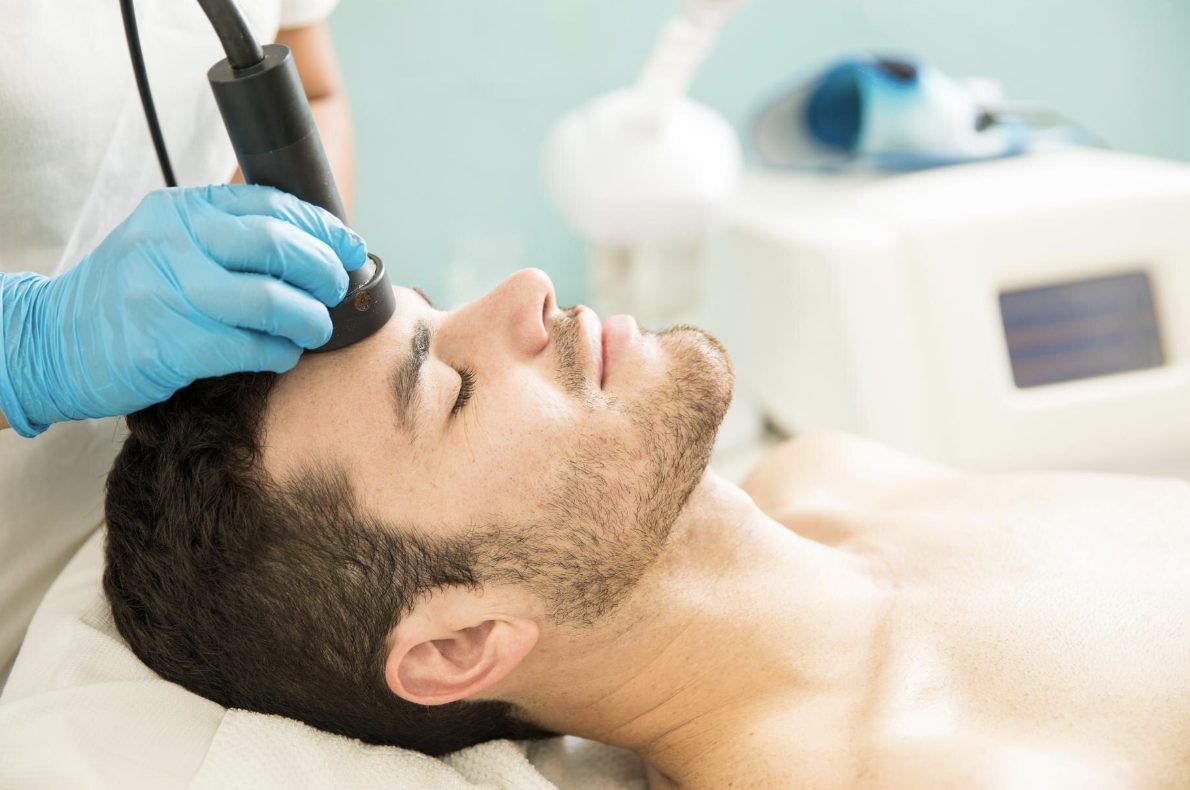
The conversation around aesthetic treatments and men has been happening quietly for longer than most people realize. The men having it are not who the cultural stereotype suggests. They are not primarily young men chasing a particular look. They are executives, athletes, professionals in client-facing roles, and men in their 40s and 50s who noticed a specific gap between how they feel and how they look.
That gap, between internal energy and external presentation, is what drives most men to look into aesthetic treatments for the first time. Not vanity in the trivial sense. A practical recognition that appearance communicates something in professional and social contexts, and that there are specific, evidence-based tools for managing what it communicates.
The number of men pursuing aesthetic treatments has grown steadily for a decade. The American Society of Plastic Surgeons documented that minimally invasive aesthetic procedures for men increased 29 percent between 2020 and 2023. The growth is not a trend in the superficial sense. It is a slow normalization that follows the same pattern that men’s skincare, premium grooming, and fitness culture followed in earlier decades, from niche to mainstream over a 10 to 15 year window.
This guide covers what the treatments actually are, what they produce, what they cost, and how to evaluate whether any of them make sense for your specific situation.
Why Men’s Aesthetic Concerns Are Different From Women’s
The conversations that happen in aesthetics consultations with male patients are consistently different from those with female patients, and the treatments that produce the best outcomes reflect those differences.
Men generally are not trying to look younger in the way that phrase is commonly understood. They are trying to look less tired, less angry at rest, or more defined. These are specific goals with specific solutions, not a general desire for a different face.
The resting expression problem: Several facial muscles, when they contract repeatedly over years, create permanent lines even at rest. The corrugator supercilii, the muscle that draws the brows together during concentration, creates the vertical lines between the eyebrows that many men develop by their mid-30s. These lines read as anger or stress to people observing the face, even when the person is relaxed and neither angry nor stressed.
This is a communication problem as much as an aesthetic one. A man whose resting expression reads as hostile or disengaged in client meetings or social situations is being evaluated on the basis of his corrugator supercilii’s overactivity, not on his actual disposition.
Neuromodulator treatment at the glabellar complex (the muscles that create the 11s) addresses this directly. The treatment does not change the face. It removes a muscular contraction pattern that was creating a specific false signal.
The volume loss problem: Starting in the mid-30s, the fat pads beneath the skin of the face begin a gradual atrophy. Bone resorption also occurs slowly from the mid-30s onward. The combination produces a face that looks more gaunt, more hollow, and structurally less substantial than it did at 28.
Men who lose facial volume often look tired rather than lean. The hollowing under the eyes, at the temples, and along the jawline produces shadows and structural irregularities that read as fatigue or illness rather than as simple aging.
Dermal filler placed in specific anatomical locations, not to plump or inflate, but to restore structural volume that has atrophied, addresses this without producing the look that makes people say someone has “had work done.” The goal is to look like yourself at an earlier point, not to look like a different person.
The Treatments Worth Knowing About
Neuromodulators (Botox, Dysport, Xeomin)
These are the most commonly received aesthetic treatments for men and the most misunderstood. The mechanism is straightforward: a small injection of botulinum toxin into a targeted muscle temporarily reduces its ability to contract. The effect lasts three to four months. The muscle then gradually regains full function.
The treatments men most commonly receive are:
- Glabellar complex (between the brows): Reduces the furrowed, concentrated, or angry resting expression
- Forehead: Softens horizontal lines from brow elevation. Requires careful dosing because the frontalis muscle that creates forehead lines is also the brow elevator. Overdosing the forehead drops the brow
- Lateral canthal lines (crow’s feet): Reduces the lines at the outer eye corners that appear during squinting
For men, dosing is typically 20 to 30 percent higher than for female patients because male facial muscles are generally larger and stronger. A provider who uses the same dose for every patient regardless of sex is not personalizing the treatment.
The result at appropriate dosing is not a frozen face. It is a face that moves normally but without the specific overactive muscle contractions that were creating the problem. A man who furrowed his brows during concentration or stress for 40 years has deeply established those muscle patterns. The treatment interrupts the pattern temporarily. With consistent treatment over years, many patients find the muscles gradually weaken and the effect lasts longer per treatment.
Dermal Fillers
Hyaluronic acid fillers (Juvederm, Restylane, and similar products) add volume precisely where the injector places them. They are reversible, an enzyme called hyaluronidase dissolves them if the result is not what was intended.
For men, the primary applications are:
- Under-eye hollowing (tear trough): One of the most impactful treatments for men who look tired regardless of how much they have slept
- Jawline definition: Filler along the mandibular border sharpens a jawline that has softened from fat atrophy or that was never as defined as the patient wanted
- Chin projection: Small amounts of filler at the chin point improve the profile and the relationship between the chin, the neck, and the jawline
- Temple hollowing: The temples are often the first area men notice becoming hollow. Restoring volume here removes the gaunt appearance that makes faces look older and less substantial
The key distinction with male filler treatment is structural placement over surface placement. Male facial aesthetics are built on bone structure and definition. Adding volume at the cheeks in ways that look attractive on female anatomy looks overdone on male anatomy. A skilled injector working with male patients understands this distinction before touching the patient.
Skin Resurfacing
Laser resurfacing, chemical peels, and microneedling address skin texture and tone rather than volume or muscle activity. These treatments improve skin quality, reducing the appearance of enlarged pores, sun damage, irregular pigmentation, and surface roughness, rather than changing structural anatomy.
Men who spend significant time outdoors, athletes, and men in their 40s and 50s who have accumulated years of UV exposure benefit most from these treatments. The results are gradual across a series of treatments and require consistent sun protection to maintain.
How to Evaluate a Provider Before Your First Appointment
The provider matters more than the treatment in aesthetic medicine. The same product in different hands produces dramatically different results.
Look at before-and-after photos from actual patients, not stock photography. Before-and-after portfolios should show real patients with a range of starting points, not only the cases with dramatic results. Look specifically for male before-and-after photos in the treatments you are considering. A provider who has done 500 female filler cases and 20 male cases is not the same as one who regularly treats men.
Evaluate the consultation before any commitment. A provider who watches you animate your face, raise your brows, frown, squint, smile, before making any recommendation is doing the clinical work that produces appropriate outcomes. A provider who quotes a treatment without observing your facial movement in multiple expressions is applying a protocol rather than assessing your specific anatomy.
Ask about dosing philosophy for male patients. The answer should demonstrate awareness that male facial muscles are larger and require adjusted dosing. It should also demonstrate conservative instinct, a willingness to start lower and add rather than to commit to a full dose at the first appointment.
Ask what happens if you do not like the result. For neuromodulators, the answer is that you wait three to four months for the effect to wear off, there is no reversal. For fillers, the answer should be that hyaluronidase dissolves hyaluronic acid filler quickly if needed.
Syaestheticsnyc maintains a clinical approach that begins with anatomy assessment before any treatment recommendation. In a market like New York where providers are abundant, the consultation quality is where practices differentiate.
What the Career and Social ROI Looks Like
The business case for aesthetic investment is not discussed openly in most contexts, but it is present in the decision-making of a significant percentage of male patients.
Research on appearance and professional outcomes is consistent if uncomfortable. A 2020 study published in the Journal of Labor Economics found that physical appearance affects earnings outcomes across industries and experience levels, with effects that persist controlling for other variables. The mechanisms include first-impression dynamics, client relationship formation, and the implicit confidence signals that appearance quality produces in the person themselves.
Aesthetic treatments do not change anyone’s capabilities. They change the impression those capabilities make on first contact. For a man in a client-facing role, a partnership track, or any context where initial impression affects long-term relationship development, the asymmetry between treatment cost and career-level return is significant.
The more commonly discussed ROI is simpler: looking the way you feel. Men who report the highest satisfaction with aesthetic treatments are consistently the ones who felt a gap between their internal energy level and their external presentation. Closing that gap produces a confidence shift that is not superficial. It is the result of no longer working against a presentation that was not accurate.
What to Expect From the Process
First-time patients almost universally underestimate how non-dramatic the experience is and overestimate the risk of obvious results.
A neuromodulator appointment takes 20 to 30 minutes. The injections are performed with a very fine needle. The discomfort is minor, most patients describe individual injection sites as a brief pinch. No anesthesia is required for most treatments.
Results from neuromodulators take three to seven days to appear as the toxin takes effect at the neuromuscular junction. The full result is visible in two weeks. Most providers schedule a two-week follow-up to assess results and add small amounts if any areas need adjustment.
Results from fillers are immediate but arrive with temporary swelling that resolves over 48 to 72 hours. The settled result at one week is representative of the final outcome.
Neither treatment requires downtime in the traditional sense. Most men return to work immediately. Minor bruising is possible at injection sites and resolves within a week.
The One Thing That Changes After the First Appointment
Most men who try aesthetic treatments for the first time spend the following week watching carefully for anyone to notice. Almost nobody does.
This is the consistent experience. The treatment that felt significant going in produces a result that reads to observers as the person looking well-rested, healthy, or more defined, not as someone who has had a procedure. People do not say “you got Botox.” They say “you look good” or “did you change something?” without being able to identify what changed.
This is the standard for a well-executed aesthetic result. Not a transformation. Not a correction that announces itself. A presentation that is simply more accurate to how the person actually is.