How to Improve Oral Hygiene: 7 Best Practices for Children
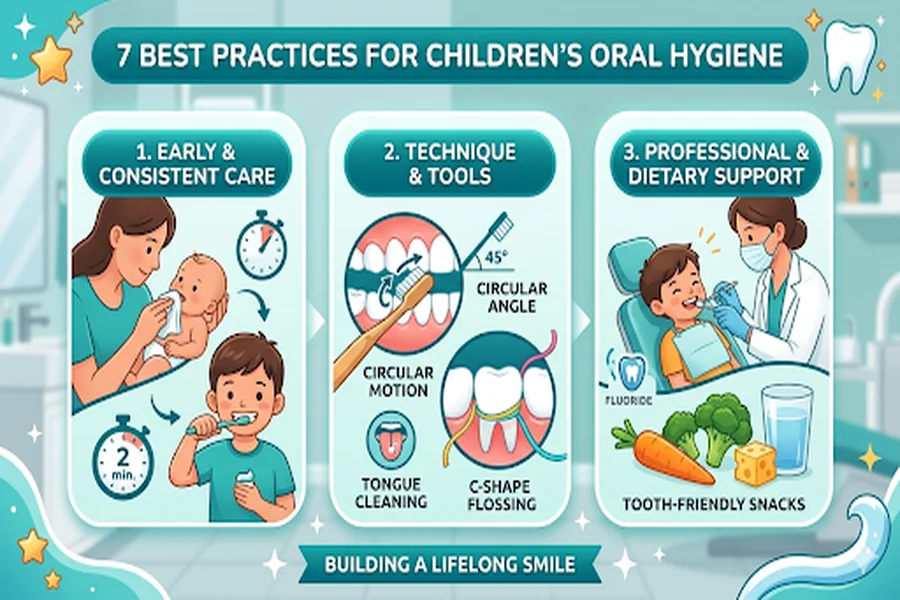
A strong dental routine is the best gift you can give your child. Brushing alone often fails because sugary snacks and sticky candies cling to tooth enamel, and their acidic content can wear down the enamel layer.
Build a clear plan that combines the right tools, the right timing, and smart food choices for your kids’ best oral hygiene. Below is a step by step guide to help you with it.
1. Start Before the First Tooth
Bacteria live on an infant’s gums even before teeth break through. This buildup can lead to early childhood cavities. Wipe your baby’s gums twice a day with a soft, damp cloth.
Moreover, switch to a small, soft-bristled toothbrush as soon as that first tooth appears. Use a tiny smear of fluoride toothpaste equals to a grain of rice. This early start cleans the new tooth and helps your child get used to the feeling of brushing.
2. Master the Two-Minute Rule
Children must brush for two full minutes, twice every day, to remove plaque. Guide them to use gentle, circular motions. Tilt the brush at a 45-degree angle toward the gum line to scrub away the “sugar bugs” that cause holes.
Supervise your child’s brushing until they can tie their own shoelaces, usually around age 7 or 8. Before then, they don’t have the hand strength or coordination to reach the back molars. Use a kitchen timer or a fun two-minute song to make sure they finish the job.
3. Floss as Soon as Teeth Touch
When two teeth touch, the toothbrush bristles cannot reach the space between them. This is where the toughest cavities form. Use colorful floss picks or flavored dental floss to teach your children about flossing in a fun way.
Show how to make a “C-shape” with the floss, wrapping it around the tooth and sliding it just under the gum line. Make flossing a strict part of the bedtime routine so food doesn’t sit between teeth for 10 hours while they sleep.
4. Visit the Dentist Regularly
Create a “dental home” early so your child feels safe and relaxed in the chair. If you are living in Livingston, New Jersey then routine visits to your dentist Livingston can help you catch subtle signs of tooth sensitivity that parents might miss. Professionals can apply sealants or fluoride varnish to toughen the enamel. Seeing the dentist twice a year turns a scary task into a normal, stress-free habit.
5. Choose Tooth-Friendly Snacks
Juice, soda, and gummy vitamins are the main causes of childhood tooth decay. These sticky sugars stay on the teeth and feed the bacteria that produce acid.
Fill your child’s plate with crunchy vegetables, cheese, and plenty of water. Tap water is a great choice because it contains fluoride, which helps strengthen growing teeth. If your child eats a sugary treat, rinse their mouth with water immediately to neutralize the acid.

6. Use the Right Motion
Brushing in straight, hard lines can hurt sensitive gums and skip over hidden plaque. Teach your child to move the brush in small circles because straight motion can hurt sensitive gums and cause bleeding and inflammation. Also, circular motion sweeps bristles under the gum line and around the tooth’s curves.
Tell your child to imagine the toothbrush is a tiny massage tool. Have them focus on one section at a time top, bottom, left, and right so they never skip a spot. Correct movement removes sticky food before it turns into a painful cavity.
7. Clean the Tongue Daily
Bacteria and food particles hide on the tongue, leading to bad breath and extra acid. Teach your child to gently brush their tongue from back to front at the end of every session. You can also buy a kid-sized tongue scraper. A clean tongue lowers the total amount of bacteria in the mouth and protects the teeth all day long.
Final Word
Better oral hygiene starts with trust and consistency. Ignore flashy products that promise “instant” fixes. Focus on early habits, the right technique, and a healthy diet. When you make dental care a non-negotiable part of the day, you ensure your child grows up with a bright, confident smile.