The Hidden Physical Cost of Desk Jobs on Men’s Health

Modern work has become increasingly digital, efficient, and fast-moving. For many professionals, that means spending long hours sitting in front of screens, moving between meetings, answering messages, and working through mentally demanding schedules with very little physical variation throughout the day.
At first glance, desk work may not appear physically demanding. Unlike manual labor or high-intensity athletic activity, office environments are often associated with comfort and convenience. Yet many health professionals now argue that prolonged sedentary routines create a different kind of strain, one that develops gradually and often goes unnoticed until discomfort becomes difficult to ignore.
Neck tension, lower back stiffness, poor posture, reduced mobility, headaches, shoulder tightness, and chronic fatigue are increasingly common among professionals who spend most of their day sitting. What makes these issues especially challenging is that they rarely appear suddenly. Instead, they build slowly through repetition, limited movement, and sustained physical imbalance over time.
As work culture continues evolving, more men are beginning to recognize that physical performance and long-term health are influenced just as much by everyday habits at work as by what happens inside the gym.
Why Sedentary Work Is Affecting More Than Productivity
The modern office environment places the body in highly repetitive positions for extended periods. Sitting for hours while leaning toward screens, working from laptops, or maintaining poor ergonomic posture can gradually affect spinal alignment, muscle balance, joint mobility, and circulation.
Many professionals do not immediately notice these changes because the body adapts incrementally. Tight hips become normal. Shoulder tension feels routine. Neck stiffness after work is dismissed as part of a busy schedule.
Over time, however, these patterns may begin influencing energy levels, sleep quality, training performance, flexibility, and even concentration. One of the biggest misconceptions about physical health is the idea that exercise alone automatically offsets sedentary work habits. While regular training certainly helps, many active individuals still experience posture-related strain if most of their daily routine involves limited movement and prolonged sitting. This explains why mobility, recovery, and movement quality are becoming increasingly important conversations within modern men’s wellness culture.
How Posture and Mobility Became Modern Wellness Priorities
A noticeable shift is happening in the way men approach physical health. Instead of focusing only on appearance or high-intensity training, many are paying closer attention to long-term movement quality and structural balance.
Mobility work, posture awareness, recovery routines, stretching, and preventative care are no longer viewed as activities reserved only for professional athletes. They are becoming part of broader wellness strategies aimed at maintaining consistent physical performance across everyday life.
This change is especially relevant for professionals balancing desk-heavy careers with active lifestyles. Long hours spent sitting can directly affect how the body performs during exercise, recreational sports, travel, and even basic daily movement.
As a result, more people are seeking integrated approaches to physical maintenance that support both recovery and long-term mobility. Virginia Family Chiropractic clinic is a great choice for all those who are looking to improve posture, reduce recurring tension, and support movement quality alongside modern work routines and fitness habits. The emphasis is increasingly moving away from reacting to pain only after it becomes severe and toward maintaining physical function more consistently over time.
Why Physical Recovery Matters Outside the Gym
Recovery is often discussed in athletic settings, but the concept applies just as strongly to everyday work environments. The body does not distinguish between strain caused by intense training and strain caused by repetitive positioning over long periods. Both create physical stress that must be managed properly over time.
For many men, the combination of demanding work schedules, reduced movement, inconsistent sleep, and prolonged sitting creates a cycle where tension accumulates faster than recovery occurs. Even individuals who exercise regularly may struggle with stiffness or discomfort if recovery and mobility are neglected outside workout sessions. This has helped expand interest in wellness practices focused on restoring movement quality rather than simply increasing training intensity.
Stretching routines, ergonomic improvements, mobility work, walking breaks, posture awareness, and recovery-focused therapies are increasingly viewed as part of maintaining sustainable long-term performance.
Small Daily Habits Often Matter More Than Intense Effort
Another important realization is that small daily habits frequently influence physical health more than occasional bursts of intense effort. How people sit, move, stand, sleep, and recover throughout the day often shapes long-term mobility patterns more consistently than isolated workouts alone. This is especially true for professionals spending eight or more hours daily at desks or in front of screens.
Minor adjustments such as improving workstation setup, taking movement breaks, changing sitting positions, increasing walking frequency, or improving posture awareness may gradually reduce unnecessary strain over time.
The goal is not perfection. It is consistency. Many modern wellness professionals now emphasize sustainable movement habits because they are more realistic for long-term health maintenance than extreme routines that are difficult to sustain.
What Health Experts Say About Long-Term Musculoskeletal Stress
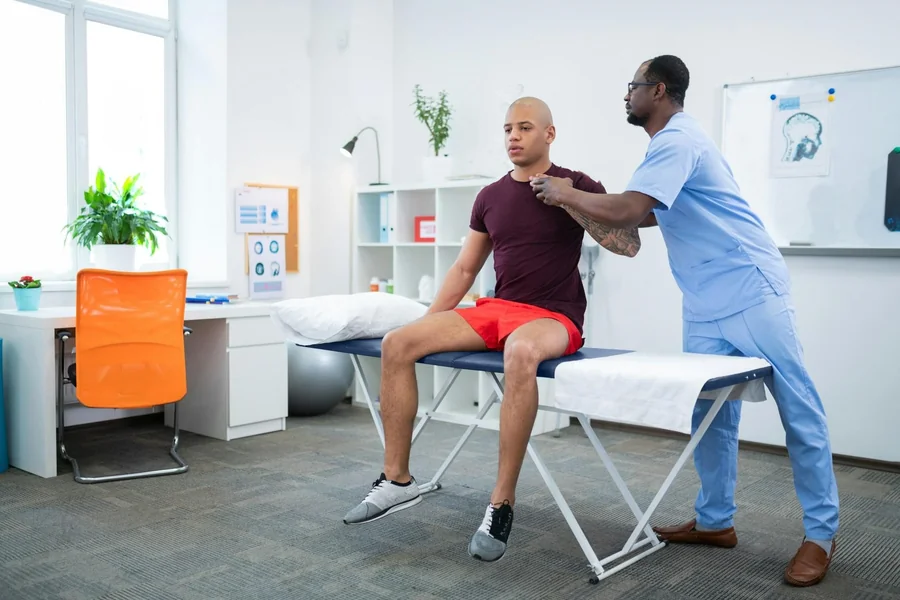
Health organizations continue highlighting the physical effects associated with prolonged sedentary behavior and repetitive posture strain. According to Mayo Clinic and other health authorities, extended sitting and poor ergonomic positioning may contribute to muscle imbalance, spinal stress, joint stiffness, reduced flexibility, and chronic discomfort, particularly in the neck, shoulders, hips, and lower back.
Mayo Clinic regularly publishes guidance related to posture, sedentary lifestyles, musculoskeletal health, spinal strain, and the long-term effects of limited movement patterns. These concerns are becoming increasingly relevant as remote work, hybrid schedules, and screen-based professions continue expanding across multiple industries.
The challenge is that physical discomfort often develops subtly. Many professionals adapt to recurring stiffness or tension without recognizing how much it may be affecting overall movement quality and daily energy levels.
Modern Men’s Health Is Becoming More Preventative
Perhaps the biggest shift is philosophical. Men’s health conversations are becoming less reactive and more preventative. Instead of waiting for injuries, severe pain, or burnout to force lifestyle changes, more people are paying attention to early warning signs connected to posture, movement quality, flexibility, recovery, and stress accumulation. This reflects a broader understanding that long-term physical performance depends on maintaining the body consistently rather than simply pushing it harder.
The modern professional environment places unique demands on physical health, even when those demands are not immediately obvious. Desk work may appear low impact on the surface, but over time, repetitive positioning and limited movement can quietly affect how the body feels and functions every day.
That is why mobility, posture, and recovery are becoming central parts of modern wellness discussions. Increasingly, maintaining physical performance is not only about how intensely someone trains, but also about how well their body handles the routines repeated between workouts.