How Research Laboratories Evaluate Peptide Product Quality
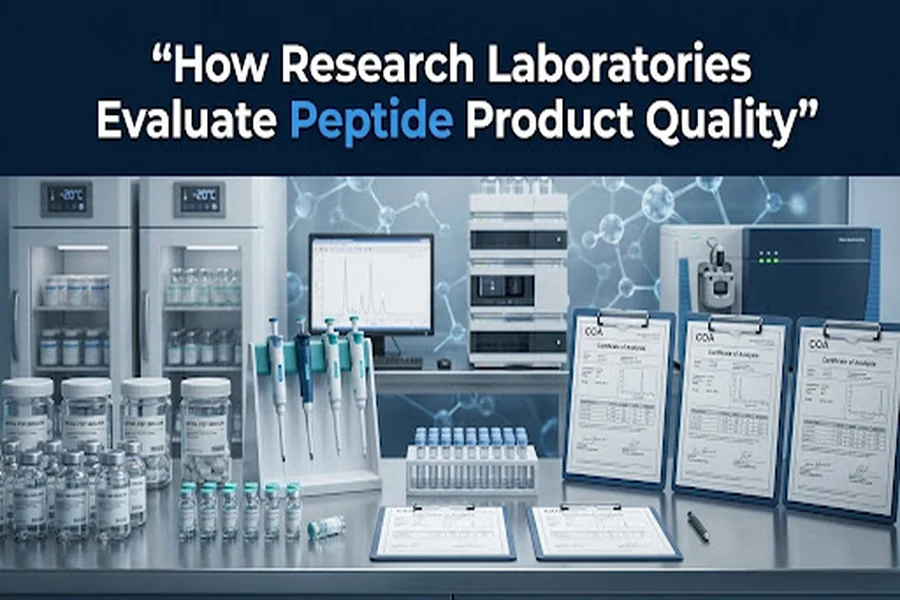
For any laboratory working with synthetic peptides, sourcing is one of the most consequential decisions a research team makes. The quality of the compounds you use shapes the reliability of your data, the reproducibility of your experiments, and ultimately the credibility of your findings. Yet evaluating peptide quality is not always straightforward, especially for teams new to this area of research.
This guide breaks down how experienced laboratories approach quality evaluation and what every research team should be checking before committing to a supplier.
Why Quality Evaluation Cannot Be Skipped
The Direct Link Between Purity and Data Integrity
A peptide that is 85 percent pure behaves differently in an assay than one that is 98 percent pure. The difference is not just a number on a document. It translates into variability in your results that can be difficult to detect and even harder to explain.
Impurities in peptide preparations can include truncated sequences, deletion products, oxidized residues, and residual synthesis reagents. Any of these can interact with biological systems in ways that introduce noise into your experimental data.
Reproducibility Depends on Consistency
Research that cannot be reproduced has limited scientific value. When a laboratory uses peptides of inconsistent quality across experiments, comparing results between sessions or between research groups becomes unreliable. Consistent sourcing from suppliers with documented batch-to-batch standards is one of the most practical ways to protect reproducibility.
The Core Methods Laboratories Use to Assess Quality
High-Performance Liquid Chromatography
High-performance liquid chromatography, commonly called HPLC, is the primary analytical tool used to assess peptide purity. The technique separates the components of a sample and measures their relative abundance. A well-characterized peptide should show a dominant peak representing the target compound, with minimal secondary peaks indicating impurities.
Reputable suppliers provide HPLC chromatograms alongside their certificates of analysis. Reviewing this data before accepting a batch is standard practice in well-run laboratories.
Mass Spectrometry Confirmation
Purity alone is not sufficient. A compound can be highly pure and still be the wrong molecule. Mass spectrometry confirms the molecular identity of the peptide by measuring its mass-to-charge ratio and comparing it against the expected value for the target sequence.
Together, HPLC and mass spectrometry data provide a paired verification that covers both identity and purity. Any supplier worth working with should provide both.
Independent Third-Party Verification
In-house testing by the supplier is a starting point, but it carries an inherent conflict of interest. Laboratories that take quality seriously look for suppliers who use independent, accredited third-party laboratories to verify their products. This external verification removes the bias that exists when a company tests and certifies its own materials.
Research teams building a dependable supply chain often reference established platforms. A Reliable Peptide Source that routinely provides third-party certificates of analysis sets the standard that other suppliers should be measured against.
Practical Steps for In-House Quality Checks
Review the Certificate of Analysis Before Use
Every shipment should come with a batch-specific certificate of analysis. Check the purity percentage, confirm the molecular weight matches the expected value, and verify the testing date. A certificate without a batch number or testing date is too generic to be useful.
Inspect Packaging and Physical Appearance
Lyophilized peptides should arrive as a white to off-white powder in sealed, clearly labeled vials. Any discoloration, unusual odor, or evidence of moisture exposure during shipping warrants a conversation with the supplier before the material is used.
Document Everything
Log the supplier name, batch number, certificate of analysis results, date of receipt, and storage conditions for every peptide that enters your laboratory. This record is essential for tracing any anomalies back to their source and supports the documentation requirements of most institutional review processes.
Laboratories that want to simplify the evaluation process by starting with a supplier that already meets high documentation standards often begin their search with a Reliable Peptide Source that has an established track record of providing verifiable quality data across its product range.
Building a Supplier Evaluation Framework
Create a simple checklist that every potential supplier must satisfy before your team places an order. Include requirements for third-party testing, HPLC and mass spectrometry data, clear labeling, proper cold-chain shipping, and responsive technical support.
Revisit this evaluation periodically, even for existing suppliers. Batch quality can shift over time, and regular review keeps your standards from slipping by default.
The Takeaway
Evaluating peptide quality is not an optional extra. It is a core part of responsible laboratory practice. The teams that get this right from the start spend less time troubleshooting unexplained results and more time generating data they can stand behind.
Invest in your sourcing process and it will pay dividends throughout your research.
Disclaimer: All peptides referenced in this article are intended strictly for laboratory and scientific research purposes only. They are not intended for human or animal consumption, medical treatment, or therapeutic use of any kind. Researchers should follow all applicable institutional protocols and regulatory requirements when sourcing and handling peptide compounds.